


Все продукты
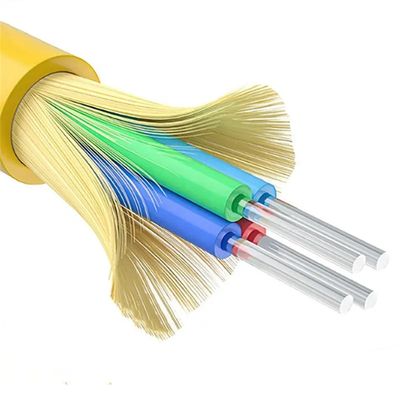
Indoor Fiber Optic Cable 6 8 12 core OM1 OM2 OM3 OM4 OM5 for Distribution Use


| Место происхождения | Шаньдун , Китай |
|---|---|
| Фирменное наименование | EBOCOM |
| Сертификация | ISO TLC |
| Номер модели | GJFJV-8B1 |
| Количество мин заказа | 2000 м |
| Цена | EXW ≥2000m $0.2/M ≥5000m $0.17/M |
| Упаковывая детали | 12. размер барабана может быть спроектирован, подробности будут рассчитаны для контейнеров. |
| Время доставки | 5-8 дней |
| Условия оплаты | Т/Т |
| Поставка способности | 5000 км/день |

Свяжитесь со мной для бесплатных образцов и купонов.
Что такое?:0086 18588475571
Вичат: 0086 18588475571
Скайп: sales10@aixton.com
Если у вас есть какие-либо проблемы, мы предоставляем круглосуточную онлайн-помощь.
xПодробная информация о продукте
| Название продукта | ГРСПЖ/ГРСПЖ | Куртка | PVC /LSZH |
|---|---|---|---|
| Участник силы | Арамидная пряжа | Волокно | Одиночный режим/Multi Mode |
| Бренд | Ebocom или OEM | ||
| Выделить | 6 core indoor fiber optic cable,OM4 indoor fiber optic cable,distribution use fiber optic cable |
||
Характер продукции
Description
An indoor fiber optic cable is a specialized cable designed for use within buildings that features a flame-retardant, low-smoke jacket to comply with fire safety regulations. Unlike outdoor cables, which are built to withstand harsh environmental conditions and are often armored, indoor cables are more flexible and focus on safety and ease of installation in structured environments like conduits, cable trays, or ductwork.
Key characteristics
Flame-retardant jacket: The outer jacket is made of materials that are flame-retardant and can also be low-smoke zero-halogen (LSZH) to prevent the release of toxic fumes in a fire.
Flexibility: These cables are typically more flexible and have a tight-buffered construction, making them easier to manage and route within a building.
Lower tensile strength: They do not require the same level of physical strength as outdoor cables, which are built to withstand pulling, weather, and UV exposure.
Common use cases: They are used for data transmission within local area networks (LANs), data centers, and for connecting devices and networks inside a building.
Installation methods: Indoor cables can be installed in ducts, cable trays, or elevated over drop ceilings and under raised floors, but they are not designed for direct burial or exposure to the elements.
Applications
Indoor wiring / indoor communication equipment, between equipment and instruments
Mechanical Specifications
| Cable Model | Outer Diameter
(mm) |
Weight
(kg/km) |
Tensile Strength(N) | Crush Resistance(N/100mm) | Bending Radius | Jacket Thickness(mm) | |||
| Long term | Short term | Long term | Short term | Dynamic | Static | ||||
| GJFJV-2F | 3.6±0.2 | 12.5 | 180 | 440 | 300 | 1000 | 20D | 10D | 0.45±0.05 |
| GJFJV-4F | 4.7±0.2 | 17.6 | 180 | 440 | 300 | 1000 | 20D | 10D | 0.8±0.1 |
| GJFJV-6F | 5.2±0.2 | 22.8 | 180 | 440 | 300 | 1000 | 20D | 10D | 0.9±0.1 |
| GJFJV-8F | 5.8±0.2 | 26.7 | 180 | 440 | 300 | 1000 | 20D | 10D | 0.9±0.1 |
| GJFJV-12F | 6.3±0.2 | 32.7 | 180 | 440 | 300 | 1000 | 20D | 10D | 0.9±0.1 |
| GJFJV-24F | 8.0±0.2 | 53 | 200 | 660 | 300 | 1000 | 20D | 10D | 1.0±0.1 |
Порекомендованные продукты
-
VIDEO
